Basketball Club Teams in San Diego Offering Elite Competition
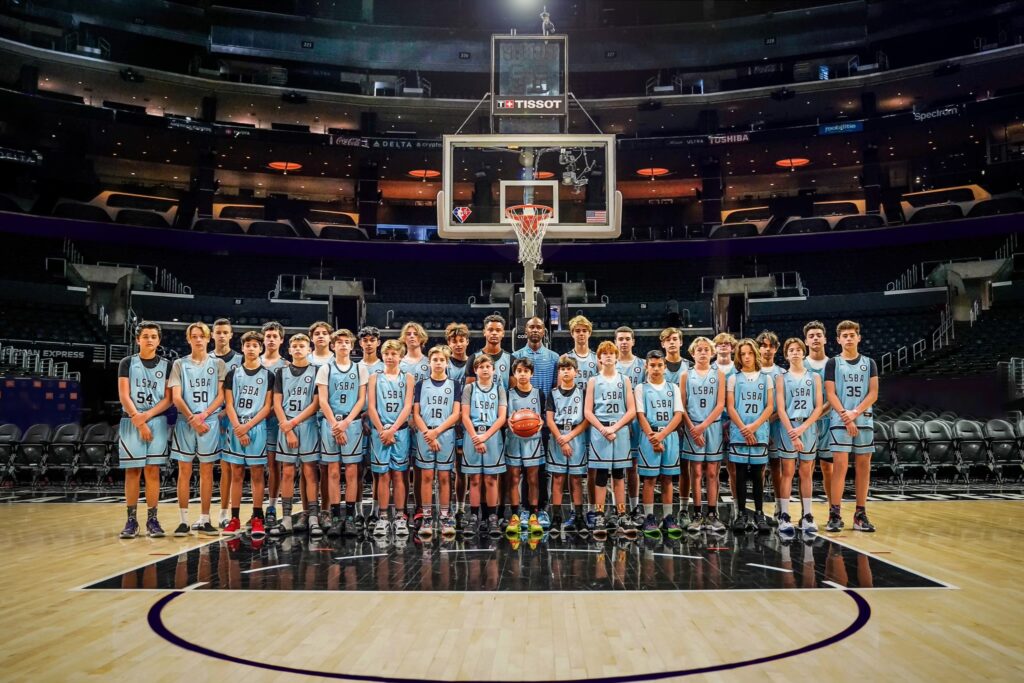
San Diego has never lacked for basketball talent. What has changed over the past decade is the structure around that talent. Club basketball in the region is no longer a side activity for players looking to stay busy between school seasons. For serious middle school and high school athletes, it has become a proving ground, a training environment, and in many cases the first honest measure of where they stand against top competition from California, Arizona, Nevada, and beyond.
That matters because the phrase "elite competition" gets used loosely. In practice, it means something specific. It means rosters with real depth. It means coaches who teach more than set plays. It means tournament schedules that expose weaknesses instead of hiding them. It means players are asked to defend, make reads, handle pressure, and produce against athletes who can match their speed and skill. A club team can have sharp uniforms and a polished social media page and still not provide that level of challenge.
Families searching for Basketball Club Teams San Diego options often find themselves sorting through marketing language that sounds nearly identical from one program to the next. The useful questions are less glamorous. Who is in the gym teaching? How are teams selected? What tournaments are they actually entering? Are players developing year over year, or simply collecting travel miles? Those answers tell you far more than a slogan ever will.
What elite competition really looks like in San Diego
San Diego sits in a strong basketball corridor. Orange County and Los Angeles are close enough to matter, Inland Empire programs routinely bring size and pace, and the Southwest region as a whole has become increasingly interconnected through spring and summer circuits. For a club team based in San Diego, true elite competition usually means stepping outside the comfort of purely local play.
At the younger ages, that can mean tournament weekends where one game is manageable and the next game feels two levels faster. That kind of swing is healthy. It reveals who can process the game and who has simply been bigger or quicker than local peers. By eighth grade and especially by high school, the separation becomes clearer. The better clubs seek out events where college-level physicality begins to show up early, even if the players are still years away from recruitment.
The strongest programs in the area tend to have a few common traits. They train with intention, not just volume. They play opponents that test them. They are selective about roster size. They understand that development and exposure are connected, but not interchangeable. Exposure without real development is short-lived. A player might get seen once. If the habits are not there, the opportunity disappears quickly.
Another important point, often missed by newer families, is that "elite" should not be defined only by wins. Sometimes a club team playing ambitious competition will have a record that looks merely decent on paper. That may still be a better environment than an undefeated team dominating weaker brackets. I have seen plenty of players improve more youth basketball clubs San Diego from six competitive losses against disciplined, athletic opponents than from a string of easy wins where bad habits went unpunished.
Why San Diego families are drawn to the club route
The appeal is obvious on one level. Club basketball offers more reps, more coaching, more competition, and for advanced players, more visibility. But the decision is rarely that simple.
San Diego families often use club teams for one of three reasons. First, a player needs a higher daily standard than the school environment currently provides. Second, the player wants to prepare for varsity basketball or a college recruiting path. Third, the family recognizes that offseason development needs structure, and club basketball creates accountability. Players are more likely to stay sharp when games are on the calendar and teammates expect them to be ready.
That said, club basketball is not automatically the right answer at every age. Elementary school players often benefit more from quality skill work and thoughtful local competition than from excessive travel. I have seen young athletes burn out by the time they reach high school because every weekend for years has been treated like a showcase. The better San Diego programs understand pacing. They know when to push and when to protect a player's long-term development.
The difference between a good club and an elite one
A good club program can help a player improve. An elite one usually does three things at once. It develops skill under pressure, sharpens basketball IQ, and places the player in games where those improvements have to hold up against serious opponents.
Skill development is the easiest part to talk about and the hardest to evaluate from the outside. Many clubs advertise ball handling, shooting work, and position training. The real question is whether those skills transfer into live play. Does the guard who looks smooth in drills make the right read against a hard hedge? Can a wing attack a closeout without needing three setup dribbles? Can a post score without being spoon-fed catches two feet from the rim? Elite environments force those answers to come out.
Basketball IQ is where stronger clubs often separate. In San Diego, as in most talent-rich areas, there are always athletic players. The clubs that consistently offer elite competition teach spacing, timing, help-side principles, transition decisions, and late-clock execution. You can usually tell within one half whether a team has been coached in detail or simply turned loose.
The third piece, competition level, is the one families usually focus on first. It matters, but it only works if the first two pieces are in place. Entering top events with a roster that has not been taught how to compete in them is expensive chaos. The best coaches know when a team is ready for a bigger stage and when another month of disciplined practice will pay off more than a weekend trip.
Age matters more than most parents think
A fourth grader, an eighth grader, and an eleventh grader should not be evaluated through the same lens. Yet families often shop for club teams as if one definition of elite applies to every age group.
For younger players, a strong club should emphasize fundamentals, body control, footwork, passing, finishing, and defensive effort. The game should still be teachable. If a team wins because one child is physically dominant and everyone else stands around, that is not an elite developmental setup. It may be a successful weekend team, but those are different things.
By middle school, the picture changes. This is when decision-making speed begins to matter more, and when players start facing peers who can punish mistakes. San Diego has enough serious basketball in this age band that club choice can materially shape a player's high school trajectory. A good fit here should challenge a player without burying them. Sitting the bench on a top roster can make sense for a short stretch, but long-term development still requires meaningful minutes and clear coaching feedback.
For high school players, especially those with college aspirations, context becomes even more specific. Girls basketball and boys basketball often operate on slightly different recruiting rhythms and event structures. Position matters. Level matters. Academic goals matter. So does timing. A rising sophomore searching for a club home needs something different than a rising senior trying to maximize a final live period. The families who navigate this best usually stop asking, "What is the best team?" And start asking, "What is the best competitive environment for this player right now?"
Geography inside the county shapes the experience
San Diego County is broad enough that logistics become part of the basketball decision. North County, East County, South Bay, and central San Diego each have their own training ecosystems, school pipelines, and travel considerations. A program that looks perfect on paper can become unmanageable if practices require a punishing weeknight commute and tournament weekends consume every spare hour.
That is not a minor detail. Fatigue affects development. So does consistency. A player who misses one practice every week because the family cannot sustain the drive is not in the same position as a similarly talented player attending every session. Elite competition is valuable, but only if the player can fully participate in the environment.
This is where families sometimes overreach. They chase the most recognized logo instead of the best fit. In a basketball market like San Diego, there are players who genuinely need to travel farther for the right level. There are also many who would improve faster with a slightly less flashy program that trains hard, competes well, and fits their schedule and developmental stage.
Coaching still outweighs branding
If I had to choose one factor that predicts a productive club experience, it would be coaching quality. Not charisma, not résumé inflation, not sideline volume. Actual teaching.
Good club coaches are clear, demanding, and observant. They correct footwork. They explain why a coverage broke down. They know when to stop a drill and when to let players play through mistakes. They also understand roster management, which is an underrated skill. Every elite team has some role tension. Someone wants more shots. Someone expects to start. Someone's parent thinks minutes should be distributed differently. Weak programs let that tension simmer. Strong coaches address roles directly and keep the group centered on improvement and competition.
Branding can obscure this. Some clubs are excellent at appearing major while delivering a fairly average gym experience. Others keep a lower profile but consistently turn out prepared, tough players who can compete in top brackets. When evaluating Basketball Club Teams San Diego families should watch a practice if possible, not just a tournament game. Games show outcomes. Practices reveal standards.
The recruiting conversation, handled honestly
Recruiting sits in the background of many club decisions, even when families do not say it right away. That is understandable. Club basketball can open doors, particularly when players are placed in front of the right eyes at the right time. But this is also where unrealistic expectations can do real damage.
A club team does not create recruitability from thin air. It can spotlight it. It can refine it. It can help a college-level player be seen in the right settings. It cannot substitute for size, skill, consistency, academics, decision-making, or long-term production. The strongest programs are honest about that. They support the process without selling fantasy.
For San Diego players, exposure often comes through a combination of regional events, national circuits for the highest-level teams, and the natural visibility that comes from playing well against respected competition. Coaches talk. High school coaches notice. College staffs track events where their level of prospect is likely to appear. The ecosystem is more connected than many parents realize, but it still rewards substance over spin.
A useful rule is simple. If a program talks about exposure constantly and development only vaguely, be cautious. The order should be reversed. Better players get better opportunities.
What to look for when comparing San Diego club programs
The fastest way to cut through club marketing is to focus on a few concrete indicators.
- Tournament quality and fit. Ask where the team played last season and what level of brackets they typically enter.
- Practice structure. Find out how often they train, how long sessions run, and whether the time is skill-based, tactical, or mostly scrimmaging.
- Roster size and roles. Too many players can dilute development and minutes, especially for younger age groups.
- Coaching continuity. A stable coaching staff usually leads to better teaching and clearer player progression.
- Player advancement. Look for evidence that athletes improve over time, not just that the club posts highlight clips.
That short checklist helps because it forces attention onto things that affect the player's week-to-week experience. The best San Diego clubs usually answer these questions without hesitation. Vague responses are rarely a good sign.
The financial side deserves straight talk
Elite club basketball is expensive. There is no sensible way around that. Team fees, uniforms, travel, hotels, food, training add-ons, and missed work for parents can push the annual cost far beyond the number quoted at tryouts. Some families can absorb that without much strain. Many cannot, and the pressure builds quietly over a season.
A responsible program is transparent about expected costs. It explains what is included and what is not. It does not bait families with a low initial number and then layer on surprise travel. In San Diego, where out-of-area events are often part of seeking elite competition, those extra costs matter a lot.
Cost alone does not determine value. A well-run, ambitious program can be worth the investment for the right player. A cheaper local option can also be the smarter choice if it offers stronger teaching and better role clarity. The mistake is assuming expensive automatically means elite. It often just means expensive.
Playing time, pressure, and the hidden emotional side
One of the toughest parts of club basketball is that it compresses ambition into a small space. Practices are competitive. Tournaments are public. Social media amplifies everything. Players compare offers, minutes, rankings, and attention. Parents compare too, whether they admit it or not.
This is where the best club environments show their value. They do not eliminate pressure, but they organize it. Players know what is expected. Coaches communicate. Accountability is real, but not personal. When handled well, elite competition builds poise. When handled poorly, it can chip away at confidence.
Not every athlete thrives the same way. Some need to be pushed hard and often. Others improve more with steadier feedback and a clearer runway. A mismatch between player temperament and club culture can be costly. I have seen talented players stagnate because they spent a season trying to survive a setting that did not suit them. I have also seen good players make a leap once they entered a tougher environment that asked more of them. The trick is honest self-assessment.
Questions worth asking before committing
A family does not need to interrogate a coach, but a few direct questions can save months of frustration.
- What level of events do you expect this team to play, and why is that the right level?
- How do you handle playing time at this age?
- What does player development look like between tournaments?
- How many players will be on the roster, and what roles do you envision?
- If a player wants to reach varsity or college-level basketball, how do you help them progress?
Notice that none of these questions ask for guarantees. Good programs do not guarantee outcomes. They describe process, standards, and opportunity.
San Diego's best club path is rarely the flashiest one
There is a temptation to think the ideal club situation is the biggest team, the broadest schedule, and the most visible circuit. Sometimes that is true. Often it is not. The best path depends on the player's current level, readiness for a role, appetite for competition, and tolerance for the demands that come with serious travel basketball.
For one player, elite competition means battling for rotation minutes on a loaded roster where every practice feels like a test. For another, it means being on a strong regional team where they can play heavy minutes against quality opponents and expand their game. Both can be valid. The key is whether the environment tells the truth about the player and gives them the tools to improve.
That is ultimately what families should seek when evaluating Basketball Club Teams San Diego options. Look past hype. Watch how the team warms up, how players talk on defense, how coaches correct mistakes, how the bench reacts, how the group responds after a rough quarter. Real quality shows up in those details.
San Diego offers enough basketball that serious players can find meaningful competition. The challenge is not whether opportunities exist. It is choosing the one that matches ambition with instruction, pressure with support, and talent with the kind of competition that sharpens it. When those pieces line up, club basketball becomes more than a travel schedule. It becomes a genuine accelerator for growth.
Lamont Smith Basketball Academy
888 Clairemont Mesa Blvd Suite T-2, San Diego, CA 92123
(619) 639-8778
FAQ About Basketball Club Teams San Diego
How can a player join an LSBA club team?
Players are evaluated during practices so the coaching staff can recommend an appropriate team and development level. Families should contact the academy to confirm current openings and evaluation details.
Are club teams available for newer basketball players?
Yes. LSBA describes multiple levels, including a developmental option for newer players as well as more competitive teams for athletes with prior club experience.
What do LSBA club team practices emphasize?
Practices emphasize basketball fundamentals, team defense, structure, communication, and player development. The specific focus may vary according to the team and experience level.
Do all LSBA teams travel?
Travel expectations vary by level. Some teams focus on local competition, while advanced teams may participate in tournaments elsewhere in Southern California or beyond. Families should confirm the current schedule before enrolling.